
The Cost of Opioid Use Disorder and the Value of Aversion
According to a new study, the total annual cost of opioid use disorder (OUD) to U.S. society in 2018 was $786.8 billion. This figure includes costs associated with excess healthcare expenditures, criminal justice resources, lost workplace and home productivity, and premature mortality. Of the $786.8 billion, $89.1 billion was attributed to additional healthcare expenditures. The study […]

Modeling infective endocarditis mortality associated with injection opioid use
Injection-related infective endocarditis (IE) is a serious and expensive medical complication among people who inject drugs (PWID). In some states, such as North Carolina there has been a 12-fold increase in injection-related IE between 2007 and 2017. Approximately 1.3% of people who inject drugs report IE within the past year, and between 0.5% and 11.8% report IE […]

Rapid versus Laboratory HIV and HCV testing for People Who Use Drugs
HIV outbreaks in Indiana, West Virginia, and Massachusetts have highlighted the need to rapidly identify and treat HIV infections among people who use drugs and their social networks in order to prevent disease transmission. Many state and local health departments have expanded their fourth generation laboratory-based HIV testing capacity that allows them to identify acute […]

Effects of COVID-19 on Syringe Service Programs
They have increased prevalence of pre-existing co-morbidities that may increase their risk of a negative outcome following COVID-19 exposure, for example respiratory and cardiovascular diseases due to smoking cigarettes, marijuana, or other substances. Syringe service programs (SSPs) not only provide sterile injection equipment to PWUD, but also other health services such as HIV and hepatitis C […]

Patients Get More Opioids Than They Need After Knee Arthroscopy
In our new study in BMJ Open, we show that in 2015-2019 more than 70% of U.S. opioid-naive patients received an opioid prescription after knee arthroscopy. They received an average of 40 tablets, despite recent studies showing most patients end up taking less than 5 tablets. The take-home message? Despite recent attention to opioid stewardship, we find wide variation […]
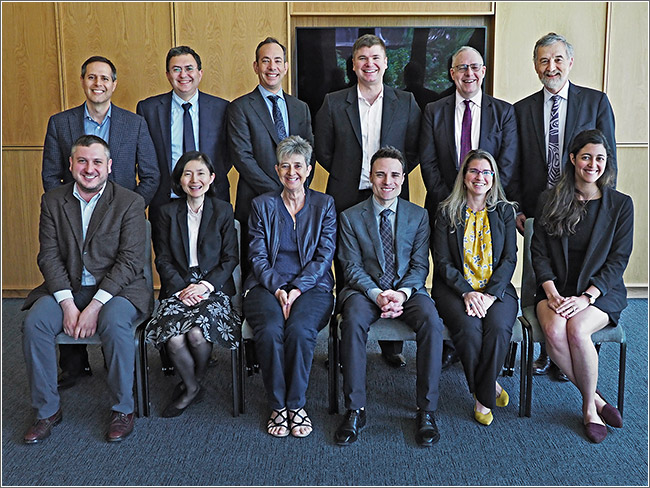
CHERISH Awarded Five-year Center of Excellence Grant to Continue Substance Use Health Economics Research
The National Institute on Drug Abuse (NIDA) of the National Institutes of Health has awarded the Center for Health Economics of Treatment Interventions for Substance Use, HCV and HIV (CHERISH) a five-year grant to continue the Center’s activities as a national center of excellence. CHERISH was founded in 2015 as a multi-institutional center for health […]

Methodology Consultation Success: Dr. Adam Carrico
“Dr. Kathryn McCollister’s input strengthened our application and we look forward to collaborating on this important and timely project that will provide valuable information on both the effectiveness and cost of this mHealth intervention.” Dr. Adam Carrico Approximately 1.6 million US adults used methamphetamine each year from 2015 to 2018, many of whom had co-occurring […]

After Opioid Overdose Emergency, Few Patients Receive Timely Follow-up
An opioid overdose is significantly more than an isolated event. Patients who present to the emergency department (ED) with overdose have a 6 percent risk of dying in the following year. As with other high-risk acute conditions, we expect patients who survive overdose to receive evidence-based treatment after leaving the hospital. Whether the overdose was due to prescription […]

Ali Jalali, Hao Zhang and Austin Kilaru Awarded Sixth Cycle of CHERISH Pilot Grant Funding
Ali Jalali, PhD Dr. Ali Jalali is a Postdoctoral Associate in the Department of Population Health Sciences at Weill Cornell Medical College. He completed his doctorate in economics at the University of Utah. His current research focuses on economic evaluations of interventions for substance use disorders and related conditions. His pilot grant will examine healthcare […]

COVID-19 Can Change The Way We Respond To The Opioid Crisis – For The Better
The Coronavirus (COVID-19) pandemic has brought unprecedented challenges in healthcare delivery to people who use drugs. However, it may also have provided impetus to precipitate innovative changes in providing opioid overdose prevention, syringe services, and medication for opioid use disorder (MOUD) to this vulnerable population. In a new Viewpoint in Psychiatric Services, CHERISH Research Affiliate Yuhua Bao from […]

Simulation Modeling Presents Opportunities To Support The Public Health Response To The Opioid Crisis In North America
Although there are several evidence-based cost-effective interventions for people with opioid use disorder (OUD), they are underutilized. Questions remain regarding intervention selection, and cost of service delivery. Simulation modeling offers an opportunity to support decision making to address the syndemic of opioid overdose, HIV, and hepatitis C (HCV). In an article recently published in the International Journal […]

In Conversation with Jules Netherland and Daniel Raymond: Engaging Health Economics and Health Services Researchers with Harm Reduction Policymakers and Advocates
When it comes to substance use disorder-related policies and funding, evidence is absolutely necessary though not sufficient. In a recent webinar with CHERISH Research Affiliates, Dr. Jules Netherland, Managing Director of the Drug Policy Alliance Department of Research and Academic Engagement, and Daniel Raymond, Deputy Director of Planning and Policy at the Harm Reduction Coalition, discussed the potential roles […]
Engage with CHERISH
Submit a Consultation Request or Contact Us to learn more about how CHERISH can support your research or policy goals.